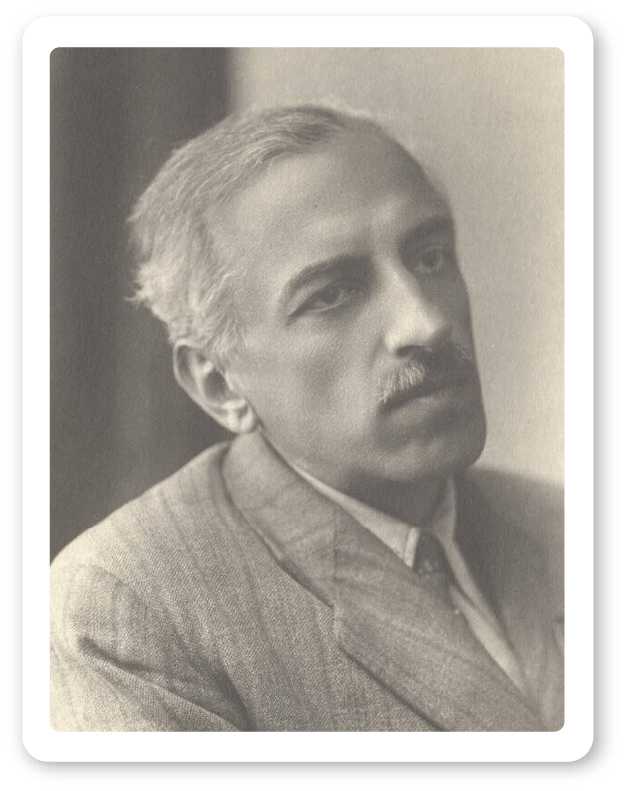
Borys Lyatoshynsky (1895–1968) is one of the most outstanding figures of 20th-century Ukrainian musical culture. He studied at the Kyiv Conservatory under the guidance of Reinhold Glière, later becoming the patriarch of the Ukrainian national school of composition.
Lyatoshynsky’s creative path was a struggle: he was forced to create during the times of cultural terror in the USSR, constantly suffering from criticism and opposing Socialist Realism. The composer, who attempted to lay the foundations for a distinct Ukrainian culture, became the main victim of the “hunt for formalists.” He was accused of “unwillingness to approach bright Soviet life.” Due to his powerful talent, he was branded as the “most characteristic representative of bourgeois-individualistic urbanism.”
His Third Symphony (1951), which had a tragic finale and was declared “formalist junk,” became a symbol of this confrontation. The composer, who wrote the first five monumental symphonies in Ukrainian classical music, managed to set a trend for modernism and educated a whole pleiad of students, including the “Kyiv Avant-garde” group.
LYATOSHYNSKY IN THE "ODE TO RESILIENCE" PROJECT
In the national symphonic project “Ode to Resilience — Symphonies of Freedom in Times of Trial,” the work of Borys Lyatoshynsky occupies a special place, symbolizing the revived classical music of Ukrainian composers.
Specifically, the first season was opened by the Prelude in F-sharp minor from Lyatoshynsky’s famous “Shevchenko Suite.” This work was created in 1942 for piano, and in 2022, it was orchestrated by the contemporary composer Yevheniy Zhaku for a large symphony orchestra.
Directly above the musical text, Borys Lyatoshynsky quoted the words of the Kobzar: “And on the renewed land, there will be no enemy, no adversary…”
As part of the “Ode to Resilience” project, this symphonic version was professionally recorded. The work is dedicated to all fallen Heroes—military personnel of the Defense Forces and civilians who prematurely died during the invaders’ assault. His music remains relevant even today.